
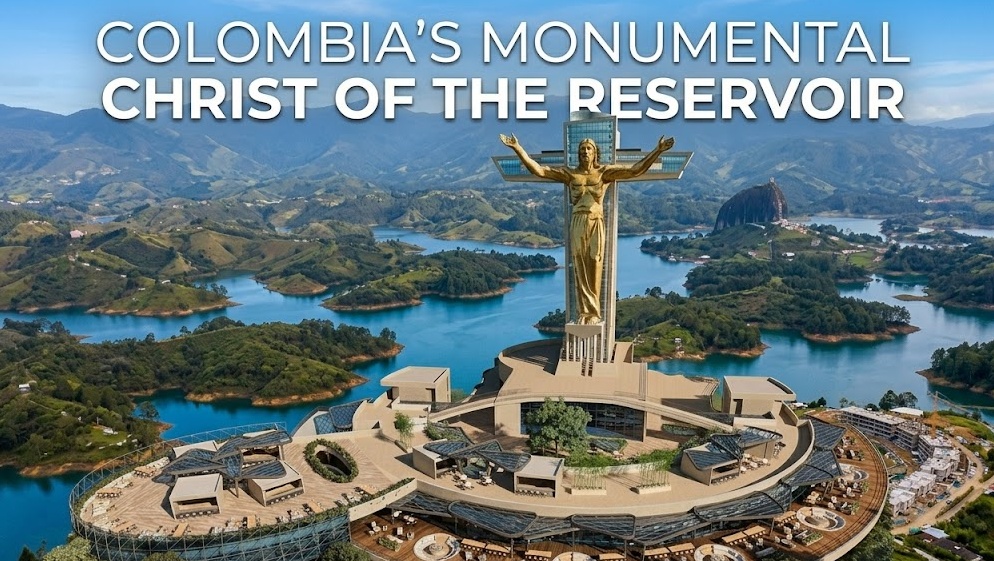
For decades, the image of Christ the Redeemer standing atop Corcovado Mountain in Rio de Janeiro has served as the definitive symbol of South American faith and engineering. However, a monumental shift is occurring in the Colombian Andes. In the municipality of El Peñol, located in the Antioquia region, construction has begun on a project that intends to redefine the skyline of the continent. The centerpiece of this endeavor is the Cristo del Embalse, or Christ of the Reservoir, a statue that will stand at a staggering height of 86 meters. To put that into perspective, the famous figure in Brazil stands at only 38 meters. This new Colombian titan is not just a solitary monument; it is the focal point of a massive tourism and residential development known as the Montecielo project.
Advanced Engineering and 3D Printing
The construction of a figure this large requires more than traditional masonry. The developers are utilizing cutting-edge large-scale 3D printing technology to bring the statue to life. Instead of pouring massive amounts of concrete into a single mold, crews are printing thousands of individual sections using a durable polymer. These pieces are then reinforced with fiberglass and high-strength resin to ensure they can withstand the powerful winds and high altitude of the region.
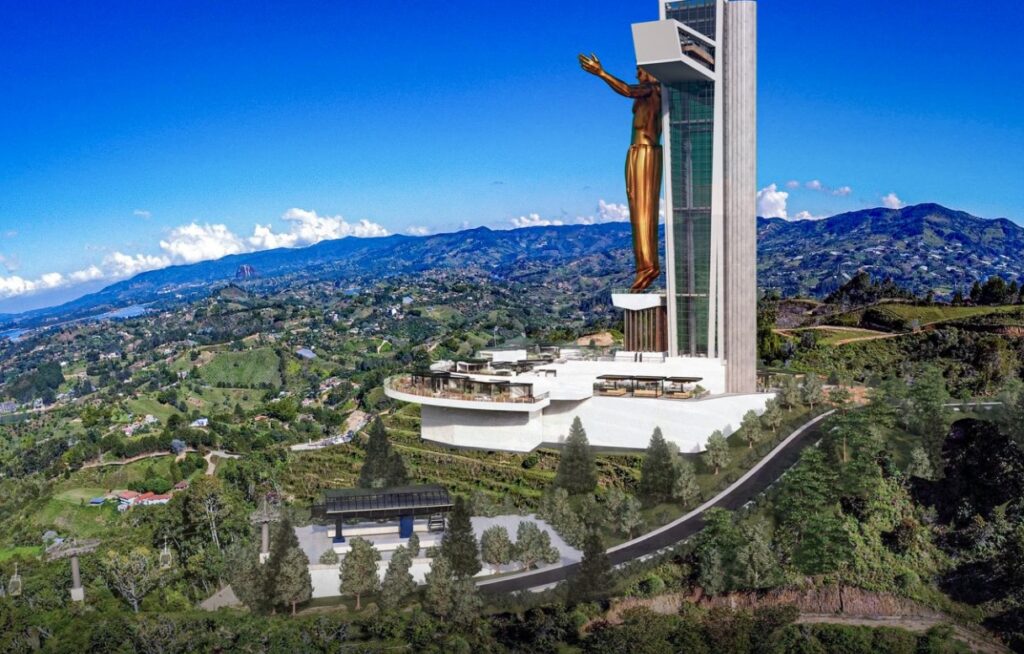
This modern approach allows for intricate detail that would be difficult to achieve with older methods. The structure is also designed to be functional on the inside. The base of the statue is a 28-level building shaped like a cross, which will house cultural centers and a museum. An internal elevator system will provide a unique experience for visitors, carrying them to an observation deck located within the head of the statue. From this vantage point, guests will have a panoramic view of the vast Guatapé reservoir and the surrounding mountains.
The Montecielo Ecosystem
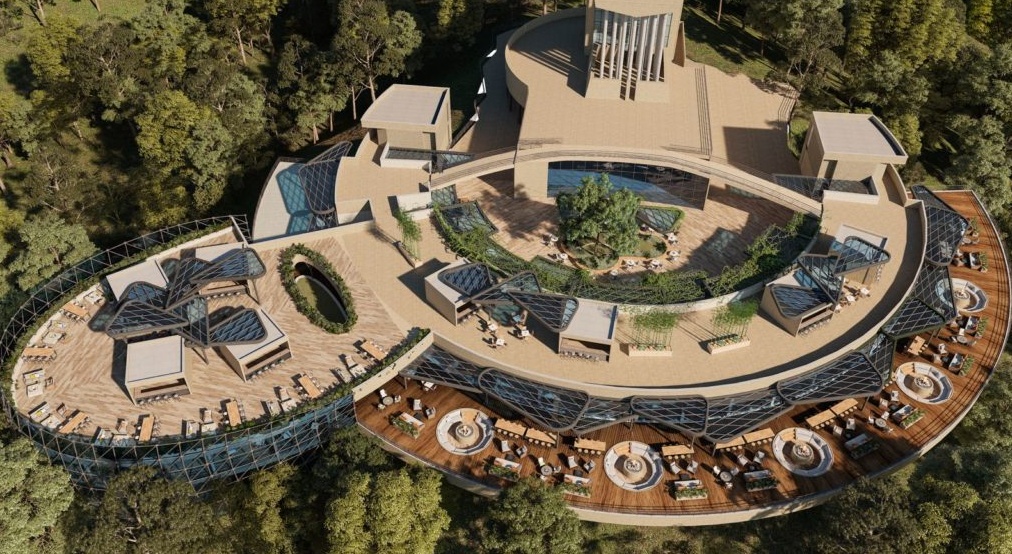
While the 86-meter Christ is the primary draw, the Montecielo project is designed as a comprehensive destination that spans far beyond the statue. The total investment for the project is estimated at 150 million dollars, and it includes a variety of luxury and commercial features. One of the most anticipated aspects is the resort, which will feature 129 lodge-style homes. These residences are designed for high-end wellness tourism, offering private amenities and a focus on relaxation.
To accommodate the expected millions of annual visitors, the site will also include a 3,500 square meter commercial mall. This area will feature dozens of units dedicated to local gastronomy and artisan crafts, helping to showcase the culture of Antioquia. Connectivity is also a major priority. A 1.2 kilometer cable car system, or teleférico, is planned to connect the urban center of El Peñol directly to the Montecielo complex. This aerial lift will be capable of transporting roughly 1,000 passengers per hour, making the monument accessible to those who may struggle with the steep terrain.
A Symbol of Resilience and History
The location of the statue holds deep historical significance for the people of El Peñol. In the 1970s, the original town was intentionally flooded to make way for a hydroelectric dam. The residents were forced to relocate, and their former homes, streets, and churches remain submerged beneath the waters of the reservoir. For the local community, the Cristo del Embalse is being viewed as a symbol of rebirth and resilience.
The developers have made it clear that the project is intended to honor this past. Dedicated galleries within the complex will tell the story of the old town, ensuring that international tourists understand the sacrifice made by the community decades ago. By placing this record-breaking monument on the shores of the water that claimed the old village, the project creates a bridge between the difficult history of the 20th century and a prosperous vision for the future.
Economic Growth and Regional Impact
The economic implications for the region are substantial. Projections suggest that the Montecielo complex could eventually attract up to 3.5 million visitors every year. This level of tourism would create hundreds of direct jobs in hospitality, maintenance, and security, as well as thousands of indirect opportunities for local business owners and transport providers.
Currently, the nearby town of Guatapé is famous for its colorful architecture and the massive rock known as El Peñol. The addition of a world-class religious monument nearby creates a synergy that could turn the area into a multi-day travel hub. Instead of a quick day trip from Medellín, travelers will have more reasons to stay in the local hotels and explore the various nautical experiences offered on the reservoir.
The Path Forward
Building such a massive structure in the mountains presents significant challenges. The local infrastructure, particularly the roads leading from Medellín to El Peñol, will require significant investment to handle the projected traffic. Furthermore, the developers must ensure that the environmental impact on the reservoir is managed carefully as the site expands.
The timeline for completion is ambitious but phased. The commercial areas and some of the resort housing are expected to be ready within the next few years, while the full assembly of the 86-meter statue is targeted for the end of the decade. When finished, the Cristo del Embalse will not only be the largest statue of Christ in the world, but also a testament to how technology and history can merge to create a new global icon. Colombia is no longer just a stop on a South American tour; with projects like Montecielo, it is becoming a primary destination for those seeking both spiritual and architectural wonders.